
Do the Arts Perform Poverty?
Dear Canadian arts workers and organizations, we are welcoming back our beloved national funder this week. I was too exhausted to submit any grant applications before the portal went down, but I salute all of you who managed to put a handful of them in before it went down in March.
The funding scarcity is doing a number on "the sector," but for the most part, it feels business as usual. We were squeezing every dime and repeatedly whispering to ourselves to be just a little more resilient, even before this.
A new round of grantwriting begins. Abandoning all entrepreneurial efforts to overhaul the business model in the arts is very tempting at this point—why become a sellout when the old reliable ways are back on the table again?

This dispatch is part 2 of a 3-part series of notes on challenges emerging from the question of how artists make money in the Canadian context.
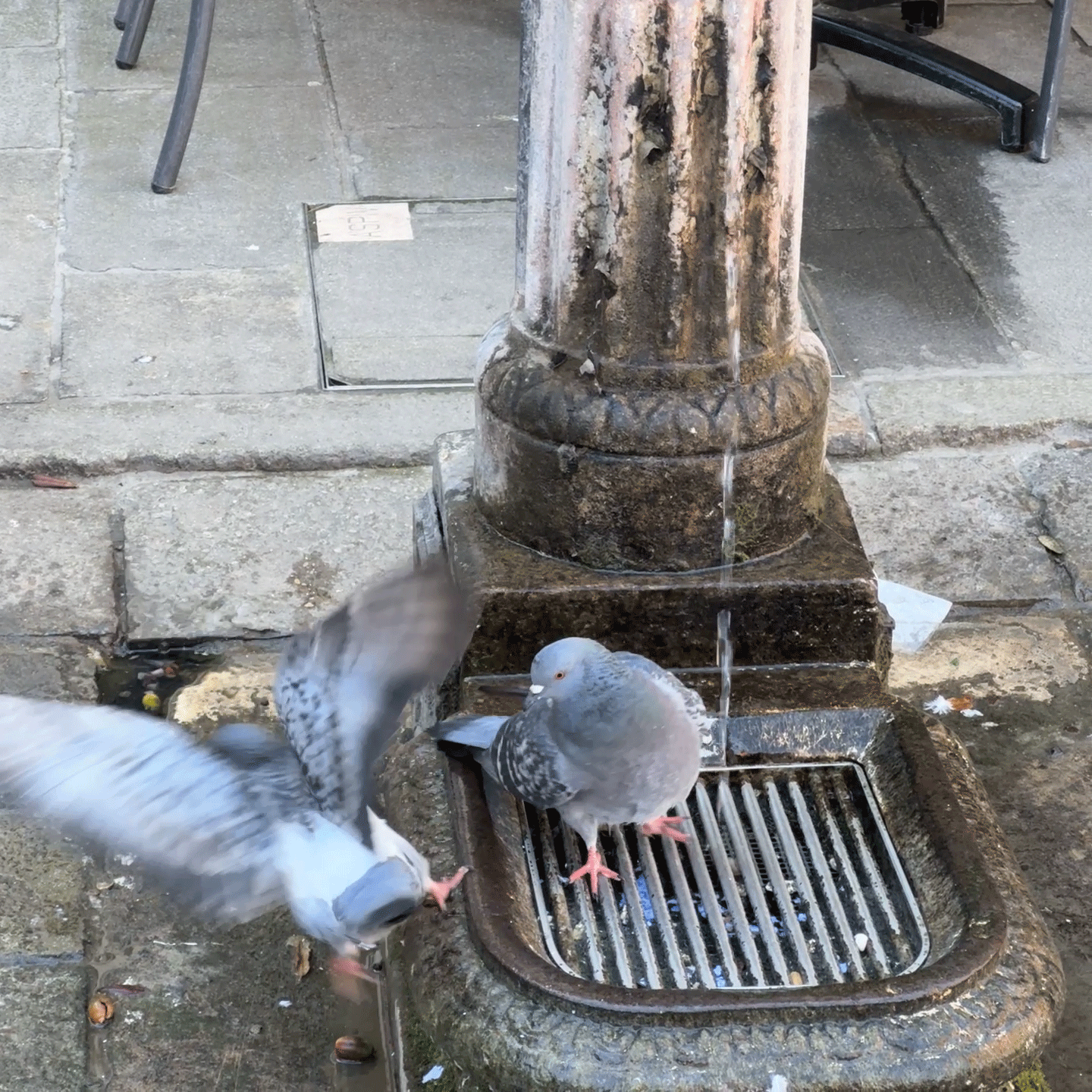
No, this post is actually not about pigeons, even though there's a pigeon renaissance going on.
We tend to talk about surveillance as someone else’s wrongdoing. But what happens when it becomes a habit to surveil ourselves, to censor ourselves?
Self-surveillance via algorithms creates what internet theorists call the algorithmic gaze—a curated aesthetic to align with a superficial sense of belonging shaped by the desire to perform or for viewing oneself on digital platforms. To maintain a curated image on the internet, we cull anything that isn't contributing to "the aesthetics" brands, curators, and other gatekeepers look for in one's account. Utilitarian aesthetic mimicking shipping labels or digital interfaces juxtaposed next to a rock signals a desire to be taken as practical, functional, down to earth, and real. While the data and information presented tend to be arbitrary, the inhibition of the utilitarian aesthetic is an attempt to be a certain way without living a life coherent with the aesthetics.
More information, more data, more functionality, and more utility... they all contribute to making better decisions, right?